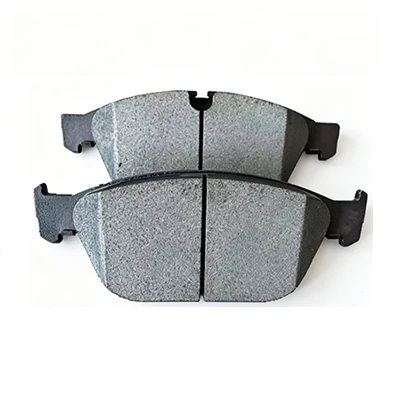
Brake pads are a crucial component of the braking system, playing a vital role in safe driving. However, brake pads are prone to wear. Many car owners are unaware of this and don't know when they should be replaced, only using them when obvious problems arise. This poses a safety hazard. Today, a brake pad manufacturer will discuss brake pads with you to give you a deeper understanding of them.
Automotive brake pads, also known as brake linings, are friction materials fixed to the brake drum or brake disc that rotates with the wheel. The friction pads are subjected to external pressure and generate friction to achieve vehicle deceleration. The quality of the brake pads directly determines the braking effect. Therefore, high-quality brake pads are protectors of both people and cars. Brake failure during driving can have incalculable consequences.
There are no mileage or age limits for replacing brake pads. Under normal circumstances, they need to be checked after approximately 80,000 kilometers. Of course, this depends on specific conditions such as the model, vehicle weight, and the driver's driving habits. Generally, brake pads used in cars that are frequently driven in urban areas or have a high braking frequency will have a shorter lifespan. Brake pad manufacturers recommend that you check the wear of your brake pads regularly.
1. Check Thickness
The simplest and most convenient method is to check the malfunction indicator lamp on the dashboard. If the brake pad indicator lamp remains illuminated, consider replacing the malfunction lamp.
We usually need to know the thickness of the brake pads. Typically, new brake pads are about 1.5 cm thick. If your brake pads are less than 0.5 cm thick, you should be concerned.
2. Listen to the Sound
If you frequently hear a grinding, metallic scraping sound when tapping the brakes, the brake pads may have exceeded their wear limit, so be sure to check them as soon as possible.
3. Feel the Intensity
When you press the brake pedal, more force is required to achieve the original braking effect, and the braking effect is noticeably weaker in the first half of the pedal travel. This may be due to a problem with the brake pads or the brake lines. A physical inspection is also necessary.